
Begin with the facts you can preserve
When a payment or displayed balance is disputed, the first useful step is often to make the situation understandable. A clear record can show what was requested, what the interface displayed and which communications followed. It cannot guarantee recovery or establish a legal entitlement on its own. Its purpose is to help a relevant bank, authority or adviser assess the facts without having to reconstruct them from a confusing collection of images and messages.
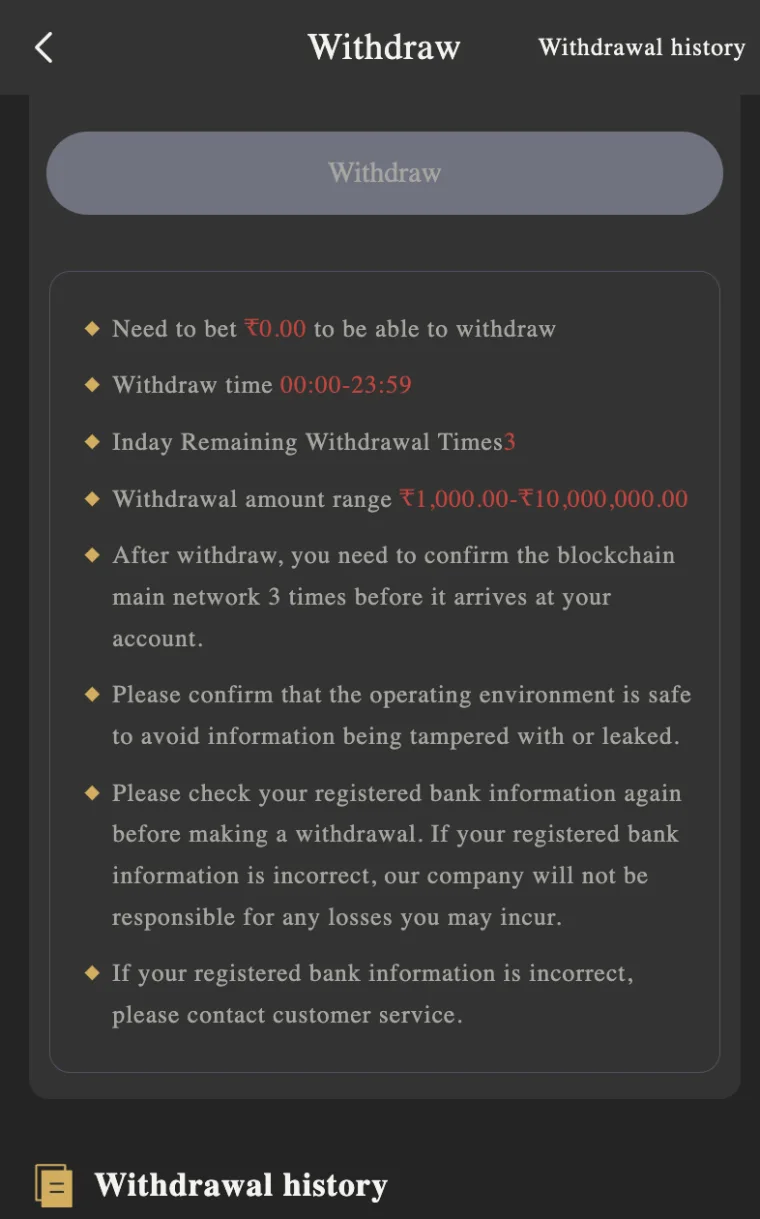
This guide addresses BDG Win withdrawal complaints as an informational topic. We have not authenticated a current operator, withdrawal policy, processing period or account balance for the brand. We do not provide a normal waiting time, a minimum amount or a required payment because those details have not been verified. A statement on another affiliate website is not enough to establish the conditions that apply to a particular dispute.
Readers in India should use appropriate official reporting and professional channels when needed. Suspected financial cyberfraud can be reported through the National Cybercrime Reporting Portal; its official instructions identify 1930 as a reporting helpline. Contacting the relevant financial institution promptly is also important when a transaction may be unauthorised. The practical material below is an original organisational guide, not a promise about a complaint outcome or a legal opinion about the underlying activity.
Separate three questions that are often mixed together
A displayed balance, a request to withdraw and an actual bank transaction are different records. The interface might show an amount without establishing that it is money owed. A request might appear as submitted without proving that a transfer occurred. A bank statement might show a debit or credit without explaining the conditions inside a separate service. A useful complaint keeps these records distinct rather than treating them as interchangeable proof.
Write three short descriptions: what the service displayed, what action you took and what your bank or payment application recorded. Use the wording visible in each source. If the interface says pending, preserve that label rather than changing it to approved. If the bank record does not show a corresponding transaction, say that you could not identify one. Precise language makes the disagreement easier to understand.
This separation also helps identify the right question for a recipient. A bank may be able to investigate a payment record, while it may not be able to decide what an unauthenticated service's internal balance means. An authority or adviser may need a broader chronology. Matching the question to the evidence avoids asking one organisation to confirm facts that only another source could establish.
Write a chronology before drafting a long message
A chronology is a sequence of dated events, each connected to a source. Begin with the first relevant interaction you can document. Continue through the disputed request, any financial transaction and subsequent communications. Keep each entry short enough that a reviewer can follow the order without reading every attachment first. The aim is clarity, not a dramatic narrative or a complete history of every unrelated account action.
If you do not remember an exact time, mark it as approximate. Do not invent precision because a form appears to expect a neat answer. A useful entry might say that an event occurred during a particular evening and that the exact time is not available. If a screenshot contains a different time zone from your device, preserve the original display and explain the difference instead of silently changing it.
Chronology also reveals gaps. You may discover that a message refers to a document you never received, or that two screenshots were captured on different days. Those gaps do not invalidate the entire record. They identify where further clarification may be needed. A transparent account of what is missing is easier to assess than a polished story that conceals uncertainty.
Create a small evidence index
An evidence index is a list of the files you intend to provide, with a short explanation of why each matters. It might identify the original request page, the relevant transaction entry and a communication asking for an additional payment. The index should let the recipient connect an attachment to a specific statement in the chronology. It should not require the recipient to guess why a random image has been included.
Use neutral filenames that do not expose sensitive identifiers. A name describing the event and date is generally easier to handle than one containing a full bank account number or phone number. Keep originals in a private location and make separate copies when redaction is necessary. If you later add another item, give it a clear place in the index rather than replacing an earlier file without explanation.
An index can remain simple. It does not need special software or a complex numbering scheme. The important qualities are consistency and accuracy. If an attachment contains only a cropped view, say so. If a message has been exported from a conversation, identify whether the surrounding exchange is included. These details help a reviewer understand the limitations of each item.
Preserve original files before editing them
Cropping and annotation can make an image easier to discuss, but they can also remove context. Preserve an original copy before producing a marked up or redacted version. The original may contain a date, page address or sequence that becomes relevant later. Keeping both versions allows you to explain what changed without relying on memory or claiming that an edited image is untouched.
Do not alter the content of a message to make the complaint read more clearly. If a spelling error or unusual phrase matters, preserve it. A separate note can explain your interpretation. The distinction between source material and commentary is important because a reviewer needs to know which words came from the service and which words are your own description.
A private backup can protect against accidental loss, but consider where it is stored and who can access it. Sensitive records should not be placed in public image folders, open community drives or social posts. An evidence collection is useful only if it remains manageable and appropriately protected. Collecting more private information than necessary can create a new problem while trying to document the original one.
Record a transaction with the correct reference
For a financial transaction, preserve the reference shown by the bank or payment application, the date, the amount and the status. Different systems may use different labels for a reference. Copy the label as well as the value so that the recipient can interpret it correctly. A number visible inside an unrelated service is not automatically the same as a banking transaction reference.
Check whether the record concerns a debit, a credit, a failed attempt or a request awaiting action. These distinctions matter. A notification can be incomplete, and a screenshot of a message is not always the strongest available account record. Where possible, use the relevant financial institution's own authenticated records rather than a forwarding message from an unknown sender.
Do not publish the full reference, account number or other sensitive details in a public review. A relevant bank or authority may request information through its official process, but a public audience usually does not need it. A redacted explanation can describe the problem without exposing the entire record. The private original should remain available if an authorised recipient needs to assess it.
Distinguish an allegation from an observation
A complaint can be firm without stating an unproven conclusion as fact. An observation might say that a request remained marked pending when you captured the page. An allegation might say that you believe the service is withholding funds improperly. A conclusion about fraud or legal liability requires further assessment. Keeping these levels separate makes the complaint more credible and reduces the risk that rhetoric obscures the evidence.
Use descriptions that another person could check. Instead of saying that support never helps anyone, describe the dates on which you contacted a particular channel and whether you received a reply. Instead of saying that every account is blocked, describe what happened to your own access. Broad claims about other people require their own evidence and may distract from the issue you can document directly.
The same discipline applies to positive claims. A single payment screenshot does not prove that a service consistently pays users, just as one unresolved complaint does not establish every fact about an operator. An informational article should avoid turning either type of anecdote into a universal verdict. A complaint record works best when it stays close to the individual events that can be supported.
Identify the channel without assuming it is official
A support profile using a familiar logo may still be unauthenticated. Record the channel you contacted and how you found it. Was it linked from the same page you were using, supplied by an affiliate or sent by an unknown person? These routes provide different kinds of context. The presence of a brand image alone does not establish that the person controls the service or is authorised to resolve a dispute.
If a channel changes names or addresses during the exchange, preserve the relevant context. Avoid chasing new contacts through unsolicited messages, especially when they promise a quick recovery. A claim that a private agent can unlock a balance should be treated as a separate claim requiring verification. It is not confirmed by the fact that you already have a problem with another service.
This draft does not supply a BDG Win support number because no current authenticated channel has been established here. Inventing one or copying an unverified contact could expose readers to impersonation. The appropriate organisational step is to record the channel involved in your own documented interaction and use independent official sources for bank or authority contact details.
Additional payment demands deserve separate documentation
A message demanding another payment to release an existing balance raises a distinct issue. Preserve the demand, the stated reason, the requested recipient and any deadline. Do not assume that paying will solve the original problem. A request can be described as a fee, verification amount or tax without establishing that it is legitimate or that the sender is authorised to collect it.
A hypothetical complaint might show that the original terms did not mention a later charge and that an unauthenticated chat account introduced it. The useful evidence is the sequence of documents and messages. You do not need to test the demand by paying it. Documenting the request and seeking appropriate independent advice is different from accepting the sender's explanation.
Avoid sending money to a person who promises to recover a disputed amount in return for an advance payment. Recovery claims need their own scrutiny, and urgency does not supply verification. If a new payment has already occurred, include it as a separate event with its own transaction record. Do not merge multiple transfers into one unexplained total that makes the chronology harder to follow.
A concise first complaint can be easier to assess
The opening message should identify the issue, the key dates and the action you are asking the recipient to consider. It does not need every detail in its first paragraph. A reviewer should be able to understand the central question before opening the attachments. The chronology and evidence index can provide the supporting material in a structured form.
For example, a fictional complaint might state that a request was displayed as submitted on one date, that the account continued to show the same status on another date and that the sender seeks clarification of the record. It could then identify the relevant attachments. This format describes the issue without asserting a processing deadline that has not been established or promising a particular remedy.
Keep the requested action within the recipient's role. A bank enquiry may ask about a specific transaction. A complaint to a relevant authority may describe suspected misconduct and ask how to submit supporting records. A lawyer may need to assess the underlying legal position. A general demand that every recipient immediately recover the full amount can obscure the practical task each one is equipped to address.
Use official financial complaint routes carefully
NPCI's complaint page explains a route for checking relevant transaction status and registering complaints with participating institutions, with final status followed through the relevant member bank or institution. That source does not decide a dispute about every internal balance shown by an unrelated website. The distinction matters because a payment system complaint and a claim against a service are not necessarily the same proceeding.
When contacting a bank, obtain its contact information independently through the bank's own authenticated channels. Do not rely on a number supplied by someone who approached you in a comment thread. Be clear about whether the concern is an unauthorised transaction, a failed payment or a disagreement with a recipient. Different facts may require different handling, and an accurate description helps the institution identify the appropriate process.
Keep any complaint acknowledgement or reference with your evidence index. Record what the institution asked you to provide and the date of your response. Do not invent a universal resolution period from another person's experience. If the process gives a specific next step, preserve that instruction. Appropriate follow up should be based on the actual route and information received rather than an affiliate article's generic promise.
Reporting suspected cyberfraud without oversharing publicly
If the concern is suspected financial cyberfraud, use the official reporting route and preserve the acknowledgement. The National Cybercrime Reporting Portal provides an official channel in India. Its published instructions identify the reporting helpline noted earlier. A report should contain accurate facts and available records, while making clear which details are uncertain. Reporting is not the same as a guarantee of recovery or a finding that an allegation has been proved.
A public review may express a person's experience, but it is not a replacement for an official report. Public posts can also attract impersonators who claim to be investigators or recovery specialists. Avoid sharing one time codes, passwords, complete identity documents or full financial records in response. A person who knows that you have a complaint does not automatically have authority to handle it.
If an official process requests documents, inspect the destination and requirements through the institution's own channel. Keep a record of what you submitted. Where you are unsure about a legal obligation or a sensitive request, seek appropriate professional advice. The goal is to provide relevant information to the right recipient, not to distribute the entire evidence collection to everyone who offers help.
Manage follow up as a record rather than a repeated argument
A follow up log can contain the date, recipient, complaint reference, response and next action. This makes it easier to see whether a specific question has been answered. It also reduces the temptation to send a new long message every time frustration rises. A short factual follow up can point to the existing record and ask about the unresolved issue without restarting the entire account.
If a reply introduces a new condition, add it to the chronology and preserve the original wording. If the reply contradicts an earlier message, identify the contradiction plainly. Do not silently replace one version with another. A later reviewer may need to understand how the explanation changed over time. The sequence can matter as much as the final statement.
A log also helps define a stopping point for unproductive contact with an unauthenticated channel. Repeating the same exchange may consume time without improving the evidence. You can preserve what you have and move to an appropriate independent route. This is not an instruction to abandon a legitimate claim; it is a way to avoid confusing endless conversation with meaningful progress.
Avoid turning a complaint into a new exposure
During a dispute, people may feel pressure to regain access quickly or prove their identity repeatedly. That pressure can make a new request seem reasonable simply because it promises resolution. Pause before installing remote access software, sharing a page containing banking information or handing over credentials. A person offering help still needs an authenticated role and a legitimate reason for any requested access.
A hypothetical recovery agent might ask for a small advance payment and then invent another charge. The original complaint does not make the new demand credible. Treat the new contact as a separate situation with its own evidence questions. No testimonial or familiar logo removes the need to verify who is involved and what they are asking you to authorise.
If credentials or device access may have been exposed, use the relevant financial institution's and device provider's official guidance. This article cannot assess the security state of a particular phone or account. It can identify the organisational principle: record the incident, avoid further unnecessary disclosure and seek help through independently authenticated channels rather than following instructions from the same unknown sender.
Keep the final account clear about its limits
A completed complaint file should distinguish established records, personal recollection and unresolved questions. It should state what remedy or clarification is sought without pretending that the outcome is certain. The evidence may support a narrow factual account even when the wider operator identity remains unknown. An honest limitation is useful to a reviewer because it shows where further investigation may be needed.
For publication, an editor should remove private identifiers, unsupported deadlines and any claim that a particular complaint method always succeeds. This BDG Win guide does not establish a current withdrawal policy or normal processing period. It explains how to make an individual record understandable and how to avoid converting uncertainty into invented product facts. That is a more useful service than offering a universal waiting time without evidence.
The practical outcome is a small, coherent file: a chronology, an evidence index, relevant original records, a concise account of the concern and a follow up log. None of those items promises recovery. Together, they can make a difficult situation easier for an appropriate recipient to assess while helping the reader protect private information and avoid additional unverified demands.
Review the file from the recipient’s perspective
Before submitting a complaint, read the opening paragraph as though you know nothing about the situation. Can you identify the disputed event, the date and the question being asked? If not, simplify the introduction. Move background material into the chronology and explain unfamiliar labels in ordinary words. A concise opening does not weaken a serious complaint; it makes the supporting detail easier to understand.
Then check every attachment against the index. Confirm that the file opens, that the relevant text is readable and that the description matches its contents. An image described as a transaction confirmation should not actually be a promotional message. If a file contains several events, note the relevant page or portion without altering the original. Small organisational errors can create avoidable confusion even when the underlying concern is legitimate.
Finally, make a private copy of the exact submission and its acknowledgement. A later follow up should be based on what was actually sent, not on a revised draft that exists only on your device. If you discover an error afterwards, correct it plainly through the appropriate channel and preserve the correction. Transparency about a mistake is more useful than quietly changing the record and leaving different recipients with inconsistent versions.
This review is a document check rather than a legal assessment. It does not establish that a claim will succeed or that any particular recipient has jurisdiction. Where those questions matter, an appropriate adviser can consider the facts and the current framework. The reader’s immediate task is to provide an accurate, coherent account without inventing certainty.