
Treat the message and the brand as separate questions
A payment request can use a familiar name without coming from the organisation it claims to represent. A logo, a polished profile and knowledge of a person's recent activity can make a message feel authentic. None of those details, by itself, establishes who controls the account or whether the requested action is legitimate. The first useful habit is to separate the identity claim from the instruction that follows it.
This guide addresses searches about BDG Win payment scams without declaring that every message using the name has the same source. We have not authenticated a current operator, support channel or payment arrangement for the brand. The examples below are hypothetical consumer safety scenarios. They explain warning signs and evidence questions, not a verified finding about a particular person or company.
The intended use is informational. This article does not tell readers how to fund a gaming account, bypass restrictions or recover losses through a new payment. For suspected financial cyberfraud in India, the official National Cybercrime Reporting Portal and its published reporting instructions are relevant starting points. Appropriate bank and authority channels should be contacted promptly when needed. No article or private agent can promise that a reported amount will be recovered.
A request to receive money should not disguise a payment
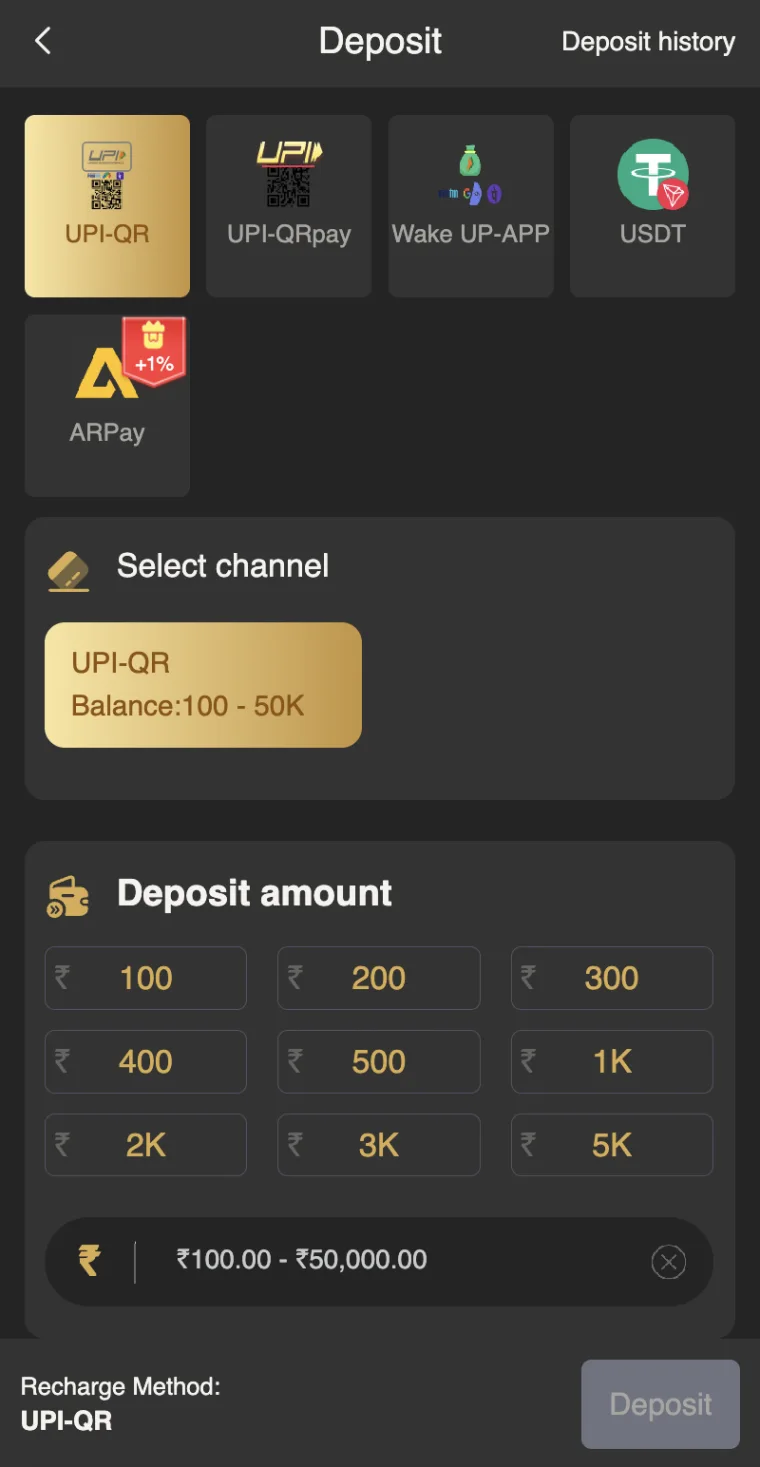
NPCI's fraud awareness material warns about messages and QR codes that promise rewards while asking for a UPI PIN. It explains that scanning a QR code and entering a PIN is used for making a payment, not receiving one. This is a concrete example of why the words in a chat message should not override the transaction details shown by the payment application.
Imagine a hypothetical sender saying that a refund is ready and asking a reader to approve a request immediately. The reader should inspect what action the application actually describes. If the page is asking to send or authorise money, the sender's refund story does not change that action. The important evidence is the transaction instruction, the recipient and the amount, rather than the reassuring label supplied in the conversation.
This principle is broader than one payment method. A request described as a receipt, confirmation or verification can still authorise something consequential. Slow down enough to understand the action before proceeding. If the instruction cannot be explained clearly, declining to act is a reasonable response. A countdown or impatient message is not a reason to stop reading the page that controls the transaction.
An unexpected support contact needs independent verification
A person may approach after seeing a public complaint, a comment or a question in a group. They may claim to be support and refer to details the reader has already posted. That knowledge can be persuasive, but public information is not proof of authority. A useful question is how the reader can independently connect the contact to an authenticated organisation without relying on the contact's own claim.
Do not use a phone number or link supplied by the suspicious message as the sole method of verification. That simply asks the same source to confirm itself. For a bank or payment institution, use its own independently authenticated channels. For an unverified gaming service, the absence of a reliable operator identity remains a limitation; it should not be filled by trusting the most confident person who appears in a chat.
A genuine looking conversation can also be copied. Familiar greetings, ticket numbers and profile badges may be decorative or fabricated. The goal is not to prove that every unexpected contact is fraudulent. It is to avoid granting authority before it has been established. You can preserve a message and leave it unanswered while checking an independent source or seeking appropriate advice.
An advance fee can turn one problem into another
A demand for money to release a displayed balance deserves careful scrutiny. It may be labelled a verification charge, clearance amount, security deposit or processing requirement. The label does not establish the legitimacy of the demand. Ask what document supports it, who is requesting it and whether that entity has been authenticated. Do not assume that a new payment will resolve the original dispute.
In a hypothetical scenario, a person has an unresolved balance and receives a message saying that a small transfer will unlock the full amount. After the transfer, another charge appears. The useful lesson is not a specific threshold or formula. It is that each new demand needs its own evidence. The existence of the earlier problem does not make the later request trustworthy.
Preserve the demand and its context if you suspect wrongdoing. A record can include the sender's claimed identity, the amount requested, the stated reason and the date. Keep sensitive details private and use official reporting routes as appropriate. Do not test a suspicious demand by sending a small amount, and do not treat another person's successful screenshot as proof that the same request is safe.
Recovery promises require their own scrutiny
Someone offering to recover money may sound helpful because they acknowledge the reader's frustration. They may claim special access to investigators, payment systems or a platform's internal team. Those claims require evidence. A recovery story does not become credible simply because the original complaint is real. The new contact is a separate relationship with its own identity, authority and risk questions.
A hypothetical recovery account might ask for an advance fee, identity documents or access to a phone. It could also promise a guaranteed result within an exact period. None of those promises establishes an actual ability to recover funds. An educational article should not endorse such a service based on testimonials or a familiar logo. It should explain that authority and capability need independent authentication.
A reader does not need to continue the conversation to be polite. Preserving the message and disengaging can be appropriate. If the contact claims to represent a public authority, verify through that authority's own channel rather than a number in the message. An official sounding title is a claim to check, not a reason to surrender credentials or authorise a new transaction.
Remote access can expose more than the disputed account
A request to install page sharing or remote control software may be presented as a convenient way to fix an issue. It can also expose private messages, financial applications and credentials that have nothing to do with the original problem. Before granting access, a reader needs to understand who is requesting it, what they can see or control and whether the request is necessary through an authenticated process.
An unknown person should not be given access merely because they know the brand name or claim that the issue is urgent. A page can reveal sensitive information even if the person says they only want to inspect one page. A reader may also misunderstand the difference between showing an image and granting control of the device. Clear scope matters, and an unauthenticated support story does not supply it.
If access has already been granted and there is concern about exposure, use the relevant bank's and device provider's official guidance. This article cannot diagnose a particular phone or account. The practical priority is to stop unnecessary disclosure, preserve the relevant facts and seek help through independently authenticated routes. Do not rely on the same unknown contact to assess whether their own access caused a problem.
Credentials are not ordinary complaint evidence
A password, one time code or payment PIN is not the same kind of information as a public offer page or a transaction date. Sharing a secret can authorise access or action. A sender may call it confirmation, verification or a temporary step, but those words do not remove the consequences. The reader should distinguish information needed to describe a complaint from secrets that protect an account.
NPCI's UPI guidance says not to share a UPI PIN and notes that bank customer support will not ask for it. That source is a useful reminder to treat a secret request as a serious issue. It does not certify any contact using the BDG Win name or establish the security of a separate application. The general principle remains that a familiar logo cannot justify disclosing a financial credential.
A well organised complaint can usually begin with a description, dates and relevant references supplied through the correct official process. It should not be posted publicly with complete credentials or identity records. If a recipient asks for sensitive information, verify the institution, the route and the requirement independently. Uncertainty about the request is a reason to pause, not to send everything in the hope of receiving help faster.
QR codes are destinations, not trust badges
A QR code is a way to encode information or direct an action. Its appearance does not tell a reader whether the destination is legitimate. A polished graphic surrounding the code can create an impression of endorsement without providing evidence. The relevant question is what the code actually opens or asks the reader to authorise, and whether that action matches the purpose claimed in the message.
A hypothetical promotional image might say claim a reward while the code leads to a payment request. The reader should not infer that a reward label changes the direction of the transaction. Similarly, a code printed beside a familiar logo may have been copied or replaced. Visual consistency is useful for design, but it is not a substitute for checking the destination and the details.
This guide does not recommend scanning unknown codes to investigate them. The educational point is that a code is not self authenticating. If the source is untrusted, a reader can choose not to interact with it. Where a financial transaction is involved, use the relevant institution's own guidance and inspect the action carefully rather than relying on the surrounding promotional story.
Small successful interactions do not validate later demands
A sender may build confidence through an ordinary conversation, a small credit or an apparently helpful action. A later request can then feel like a continuation of an established relationship. But evidence about one interaction does not automatically validate another. Each consequential request still needs a clear purpose, an authenticated source and an understandable action.
Consider a hypothetical contact who answers a public question accurately and then asks for a payment to resolve an unrelated account issue. The accurate answer may have come from publicly available information. It does not prove access to the account or authority to collect money. The reader should assess the payment request on its own evidence rather than transfer all confidence from the earlier conversation.
The same caution applies to a friend's experience. A friend may genuinely have received a payment or used a particular contact, but that does not establish the identity of a new sender or the safety of a new request. Accounts can be impersonated, circumstances can differ and memories can omit conditions. Personal familiarity can be useful context while remaining insufficient for a broad assurance.
Urgency can interfere with ordinary checking
Messages may claim that an account will close, a balance will disappear or a special resolution window will end unless the reader acts immediately. A real deadline should be explained by an authenticated source and relevant conditions. An unexplained countdown does not establish authority. It can instead make it harder to read the request carefully and ask basic questions.
A practical response is to write the instruction in neutral language. What exactly is the sender asking you to do? Send money, share a code, install software or open a link? Once the emotional language is removed, the action becomes easier to assess. If the sender refuses to explain it or insists that independent checking will ruin the opportunity, that pressure is itself useful information.
A reader can also decide that the uncertainty is not worth further attention. There is no obligation to prove every message fraudulent before declining it. This is especially important when the proposed action could expose financial credentials or create another payment. The right to pause is more useful than any promise that a quick response will finally resolve the problem.
Preserve evidence without building a public dossier
If a message appears suspicious, a small private record can help explain what happened. Preserve the original conversation where possible, the date, the sender's claimed identity and any transaction instruction. Keep the distinction between what you observed and what you suspect. A reviewer should be able to see the source material without having to separate it from accusations added inside the image.
Avoid posting complete phone numbers, account details or identity documents in a public complaint. Public exposure can create privacy problems and attract further impersonation. If an official recipient needs specific details, provide them through the appropriate authenticated process. A redacted public account and a private original serve different purposes and should not be confused.
The record does not need to contain every unrelated message on your phone. Collect what is relevant and explain why it matters. A concise chronology with a few well identified attachments can be more useful than a large folder of unlabelled images. The goal is to support an assessment of the incident while limiting unnecessary disclosure and avoiding a new source of confusion.
Respond through the relevant institution, not the stranger
When a payment may be unauthorised or fraudulent, contact the relevant financial institution through its own authenticated route. Explain the action, the date and the available reference accurately. Do not assume that an unknown person who offers to help can replace the institution's process. A chat account may sound confident while having no authority over the transaction at all.
For suspected financial cyberfraud in India, official reporting channels provide a way to submit the concern and supporting facts. Keep the acknowledgement or reference with your private record. Reporting promptly can be important, but no source cited here guarantees a recovery. The outcome depends on facts and processes that an affiliate article cannot determine.
If you are unsure whether a concern is a transaction failure, a commercial dispute or suspected fraud, describe the facts rather than choosing an exaggerated label. An appropriate recipient can help identify the relevant route. Accuracy is more useful than certainty invented under pressure. A clear account should say what happened, what you authorised and what remains unknown.
A hypothetical incident shows how the pieces fit together
Imagine a reader who posts that a displayed balance has not changed. An unknown account replies with a familiar logo, claims to be support and offers an immediate refund. It sends a QR code, asks for a PIN and says that the window closes in five minutes. Each element needs separate assessment: the public complaint explains how the sender found the reader, the logo is an identity claim and the transaction request is a proposed action.
The reader does not need to solve the entire operator identity question to avoid the immediate exposure. They can decline the request, preserve the message and contact relevant official channels if necessary. They should not send a test payment or reveal a code to see whether the sender is genuine. A demand that contradicts the claimed purpose is enough reason to stop and seek independent clarification.
This example is not an allegation about a particular BDG Win contact. It is a model for analysing messages that borrow a brand name. Keeping the components separate prevents one persuasive detail from validating the whole story. The same method can be applied to shopping refunds, delivery messages and other situations where a stranger claims to resolve a problem through a new financial action.
How an affiliate publisher should cover scam reports
An affiliate page has a responsibility to distinguish documented incidents from rumours and broad accusations. A reader report should identify what can be verified and what remains the person's account. Private information should be removed before publication. The page should not use a complaint as a dramatic introduction to a new promotional link, because that can confuse the educational purpose and exploit a reader's concern.
The publisher should also avoid invented support numbers, recovery guarantees and lists of supposedly approved contacts without evidence. A link labelled support can expose a reader to harm if the destination is unauthenticated. It is better to explain the research limitation than to supply a convenient but unverified answer. Commercial incentives do not reduce the need for careful identity checks.
For this BDG Win draft, no current support or payment destination is endorsed. The article describes warning signs and relevant evidence practices. A final editorial review should check every link and image for implied authority that the text does not support. The visual presentation should reinforce careful reading rather than recreate the same urgency and reassurance tactics the article teaches readers to question.
A short personal response plan
A reader can prepare a response plan before encountering the next urgent message. Decide to pause before authorising a new payment, keep financial secrets private and verify institutions independently. Know where your own bank provides official contact information. These are organisational habits rather than a guarantee that every threat will be recognised, and they do not require engaging with an unknown sender.
If a suspicious interaction occurs, write down what action was requested and whether you took it. Preserve the relevant record, contact the appropriate institution when needed and use official reporting routes for suspected cyberfraud. If another person helps you organise the facts, share only what they need and avoid handing over credentials. Assistance with paperwork should not become uncontrolled access to your accounts.
The central distinction is simple: a familiar brand name can be copied, while authority must be established. A payment request should be understood on its actual terms, not through the story surrounding it. This guide cannot certify a BDG Win contact or promise a complaint outcome. It can help readers recognise when a proposed action needs independent verification and when declining to act is the clearest available choice.
Check the direction of every requested action
A useful final check is to describe the action using a verb. Are you sending, receiving, approving, sharing, installing or granting access? A message may use several reassuring nouns while avoiding the verb that explains the consequence. Writing the action plainly can reveal a mismatch. A supposed refund that requires sending money is different from a record showing that money has arrived, regardless of how confidently the sender describes it.
Then identify who benefits from the action and who bears the exposure if the explanation is wrong. If you provide a credential, the other person gains information while you take the account risk. If you authorise a transfer, the transaction has consequences even if the promised resolution never occurs. This does not prove a particular request unlawful, but it explains why the burden of verification should come before action rather than afterwards.
Finally, ask whether the proposed verification is independent. A second profile introduced by the same sender may be another part of the same story. A website reached only through their link may repeat the same unverified claim. Independent checking means using a source whose authority does not depend entirely on the person making the request. Where such a source cannot be established, leave the claim unresolved. You do not have to create a new exposure merely to find out whether a confident stranger was telling the truth.
This action based review is deliberately small enough to use under pressure. It does not require technical expertise or a full investigation of a brand. It asks the reader to understand one immediate request, preserve uncertainty and choose an authenticated route when further help is needed.