
What this guide can establish
A game catalogue can look straightforward while leaving the important questions unanswered. A row of colourful tiles might be labelled prediction, casino, sports or cards. Those labels describe a theme or a familiar format, but they do not establish who operates the service, what the rules say, whether any particular game is available, or whether an activity is lawful for an Indian reader. This guide explains how to read those categories as information, without turning a visual impression into a recommendation.
The name BDG Win is the subject of this educational article. We have not authenticated a current operator catalogue or independently tested its games. References to categories below are general explanations, not confirmation that a specific BDG Win website or application supplies them. A screenshot provided by an affiliate can help identify what an interface appeared to show, but it cannot establish the current product, the owner of the software or the conditions applying to a particular account.
For India, the legal context also matters before any product comparison. The government describes the Promotion and Regulation of Online Gaming Act, 2025 and the Rules, 2026 as distinguishing prohibited online money games from permissible categories. The PIB release dated 22 April 2026 states that the Rules take effect on 1 May 2026. Readers should consult the current official text and obtain appropriate legal advice for a specific situation. This article does not offer registration, payment or restriction avoidance instructions.
Begin with mechanics rather than artwork
A useful description starts with what a person actually does. Does the person solve a puzzle, choose an outcome, arrange a hand, manage a character or watch an event? What changes after a choice? What counts as the end of a round? Questions like these reveal much more than the background image. A football photograph may decorate a general prediction product. A card illustration might lead to a tutorial, a free practice activity or an activity involving stakes. The photograph does not resolve the distinction.
Imagine two tiles both showing a spinning wheel. In the first hypothetical game, a user spins for decorative items that cannot be sold or redeemed. In the second, the user pays to enter and expects a monetary reward. The animation can be identical while the practical and legal questions differ substantially. An editorial category should therefore describe both the visible mechanism and the reward structure, while leaving unverified facts explicitly unknown. Calling both products simply a wheel game loses information that a reader needs.
For a written catalogue entry, separate observation from interpretation. An observation might say that a supplied screenshot contains a tile labelled cards. An interpretation might say that the label suggests a card themed activity. A verified claim would require further evidence about the actual rules. Keeping those sentences separate prevents a common mistake: treating a plausible interpretation as a fact because it sounds natural in a product description.
Prediction categories and uncertain outcomes
Prediction is a broad label. It can mean guessing a colour, a number, a fictional result or the outcome of a real event. The essential question is what determines the result. It might be a random process, an external event or a mechanism the reader cannot inspect. A countdown and an outcome history do not answer that question. They show interface elements, not the underlying process or its independent verification.
An educational explanation should identify the outcome set, the timing of the decision and the treatment of incomplete rounds. It should also explain whether the examples are hypothetical. For instance, a teaching exercise with three equally likely symbols can illustrate probability, but it does not tell us how a real platform generates results. A publisher should resist transferring numbers from a simple classroom model into a commercial product whose mechanism remains unknown.
Prediction content is especially vulnerable to misleading pattern language. A sequence can look meaningful because human attention notices repetition and symmetry. That does not establish that a future result follows the same shape. A category guide should avoid terms such as certain signal, recovery pattern or guaranteed colour. Those phrases imply knowledge that the evidence does not provide. The useful editorial task is to clarify uncertainty, not disguise it as a system.
What casino themed categories do and do not tell you
Casino is often a visual umbrella rather than a precise rule description. It may include reels, wheels, cards or virtual table layouts. A responsible catalogue explanation should identify the specific mechanic instead of assuming every item has the same rules. Reels may display symbols, while a card activity may require decisions during a hand. A shared casino heading does not make their probabilities, interaction patterns or reward arrangements comparable.
Terms such as return, multiplier and jackpot need definitions tied to a particular rule document. A large number on a tile may describe a theoretical maximum, a promotional statement or a fictional display. Without context, it cannot be interpreted as a likely result. A publisher should not turn a visual number into an expected personal outcome. If the relevant document cannot be obtained, record the meaning as unverified and explain what would be needed to clarify it.
The same care applies to animations. A near match on a reel may feel close to a favourable outcome, but its emotional effect is not evidence about the next event. An exciting sound does not change the mathematical meaning of a result. Category descriptions can help readers recognise this separation between presentation and mechanics without making any claim about the software used by an unverified provider.
Sports themed activities require another layer of questions
A sports label could refer to a sports simulation, a trivia activity, a management game, a stream of match information or an outcome based product. Before describing it, identify which of these is actually present. A cricket image alone cannot establish live coverage, data rights, market availability or a relationship with a sports organisation. Those are separate claims requiring separate evidence, even when a landing page places them close together.
For a hypothetical sports simulation, questions might concern controls, accessibility and whether it works offline. For an information product, the questions would concern data sources, update timing and correction procedures. For an activity involving payment and expected monetary winnings, legal and financial concerns become central. An editor should not compare these products on a single list without explaining what is being compared and why that comparison would help a reader.
Event naming also creates ambiguity. A shortened team name or tournament image can be outdated, generic or used without a verified commercial relationship. Where a source supplies no clear attribution, avoid writing that a service is an official partner. The correct description may simply be that the interface uses a sports theme. Modest wording is more useful than a confident claim that cannot survive a basic evidence check.
Card games, rummy labels and the rule document
Card games are a family of mechanics rather than one experience. A rule set determines the deck, the number of players, the objective, the order of turns and how a round ends. A rummy label generally suggests arranging or combining cards, but it does not establish a specific variant. A useful article would ask for the exact rules before describing a winning condition, because a familiar name can cover different conventions.
A distinction between skill and chance should never be used casually as a substitute for current legal analysis. An activity can involve decisions and still raise legal questions because of its payment and reward structure. For an Indian audience, historical descriptions of a category are not enough to establish its present permissibility. A publisher needs current official sources, the actual product facts and, where relevant, qualified advice.
If all that is available is a tile, describe the tile. If a rule page is available, identify its date and whether it belongs to the same service. If the rules cannot be linked to the actual interface, state that limitation. This evidence ladder keeps a category guide useful even when a publisher cannot responsibly provide a complete product review.
Free social games and the meaning of rewards
A free social game may offer entertainment without an expectation of monetary winnings, but the word free still deserves inspection. There may be optional purchases, advertising, subscriptions or limits on access. None of those arrangements can be inferred from a colourful start button. A category description should distinguish entry cost, ongoing spending and the nature of rewards. They answer different questions about the user's experience.
Virtual coins are another source of confusion. Some are merely counters within a game. Others may have a purchase cost, a transfer mechanism or an external redemption arrangement. A writer should not assume that a coin symbol means money, and should not assume that a virtual label removes every financial concern. The practical task is to inspect what the item can do and what the terms actually permit.
For a hypothetical comparison, consider a puzzle that awards points only for a local leaderboard and a social game selling cosmetic costumes. They may both be non-cash experiences, yet their spending and privacy implications differ. A careful catalogue can explain those differences without ranking them or pretending that one label captures every aspect of the product.
Interface sections that are not game categories
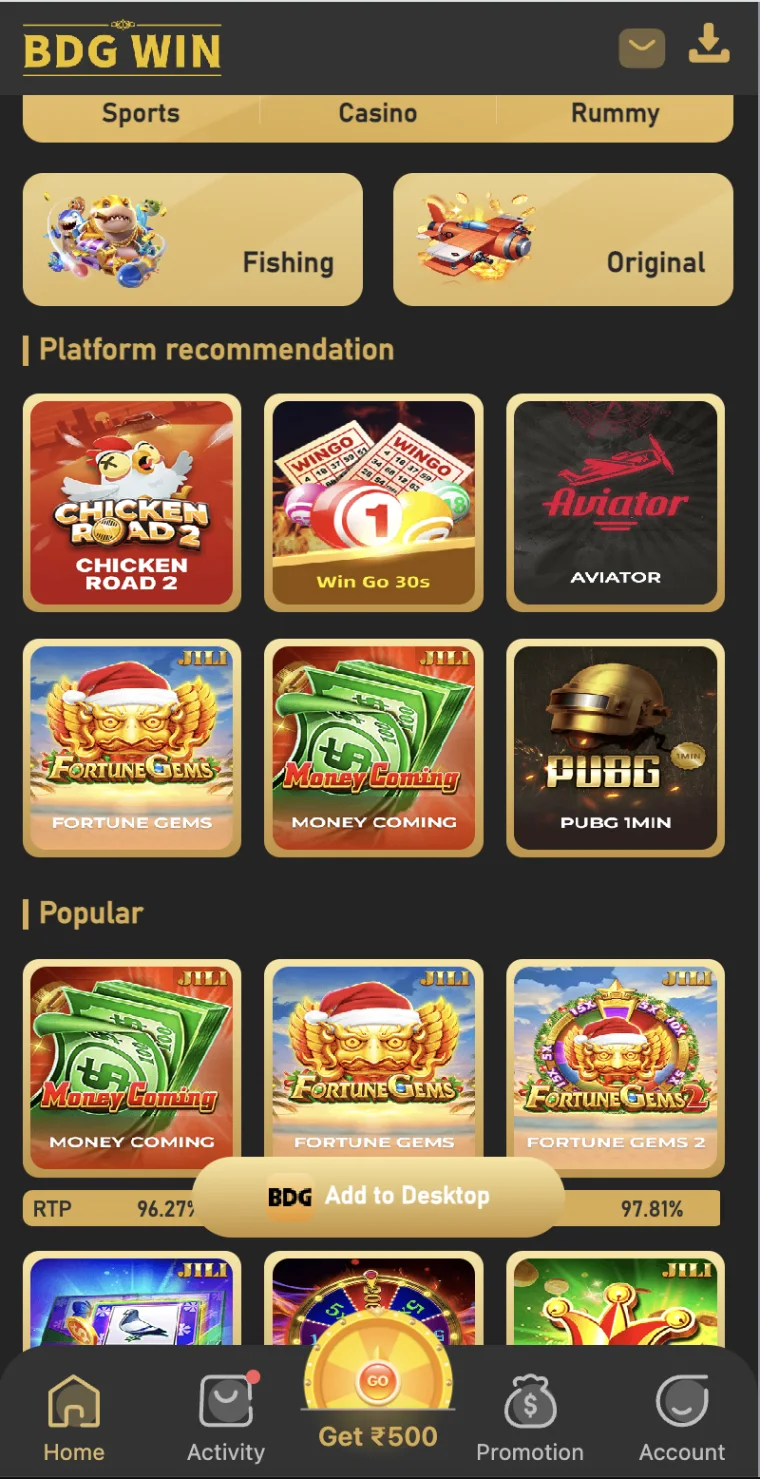
A lobby often contains sections such as popular, new, featured and recommended. These are editorial or commercial arrangements, not mechanical definitions. Popular might reflect a publisher's choice rather than independently measured usage. New may refer to a recent addition to the interface rather than a newly developed game. An affiliate should not turn these labels into facts about market demand or product age without supporting documentation.
Likewise, an icon for rewards, an invitation panel and a wallet tab are not proof of a particular game category. They describe navigation or account features. A category guide should avoid mixing a payment interface with the entertainment mechanics as though both were comparable products. Keeping them separate makes the resulting explanation easier to understand and avoids overloading ordinary readers with an inaccurate map of the service.
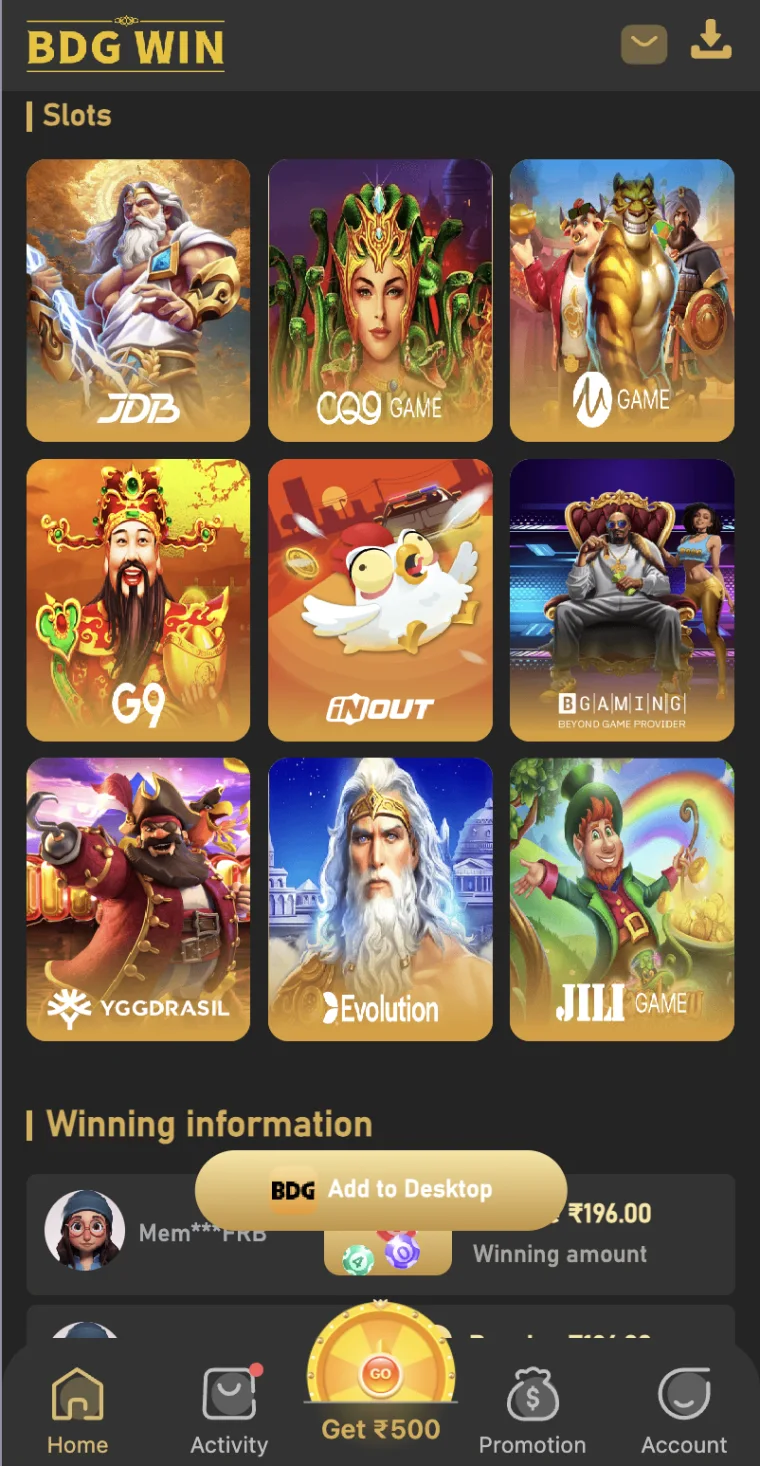
When documenting a supplied image, record where each element appears and what its label says. Then note what remains unknown. A button can be visible without its destination being verified. A balance can appear without evidence about ownership or redemption. This method provides a clear account of the interface while resisting the temptation to invent missing product details.
Building an evidence card for each category
An evidence card is a small editorial record containing the category label, the observed interface, the relevant rule source, the date reviewed and unresolved questions. It should identify whether the material came from a current page, an archived page, a supplied screenshot or a third party statement. These sources are not interchangeable. A screenshot can preserve appearance; a live rule document may explain conditions; neither automatically authenticates the other.
Add a field for the reward model. Use plain descriptions such as points with no verified redemption, optional purchase model not yet reviewed, or monetary arrangement not authenticated. Avoid replacing a missing answer with reassuring wording. A field marked unknown is valuable because it tells the editor and the reader exactly where confidence ends. It also creates a clear research task for a later update.
Finally, include a publication decision. Some categories can be explained generically without linking to a provider. Others require substantial verification before any product specific claim is appropriate. An editorial record helps prevent an attractive image from becoming the strongest evidence simply because it is easiest to publish. The image can illustrate a page while the text remains precise about what is actually known.
Comparing categories without ranking unverified services
A category comparison can be useful even when provider details are unknown. Compare dimensions such as the action a user takes, whether outcomes are uncertain, whether interaction is solitary or social, and what information a reader needs to understand the rules. These are meaningful educational distinctions. They do not require an invented rating or a claim that one untested service offers a better experience.
Consider a hypothetical puzzle, a sports information feed and a colour guessing exercise. A puzzle may reward completing a defined problem. A feed may help someone follow an event without participating in a game. A guessing exercise may centre on uncertain outcomes. Placing all three under entertainment is possible, but a reader benefits from seeing the differences in purpose, interaction and evidence needed to evaluate each one.
If an article mentions BDG Win alongside another brand, keep the provider facts in a separate evidence column. Unknown ownership should stay unknown for both. An attractive screenshot should not earn one service a higher trust score. Fair comparison means applying the same standard, including the same willingness to leave a cell blank when the evidence is insufficient.
Accessibility, privacy and device considerations
Category names say little about whether a game is readable or accessible. A fast countdown may be difficult for someone who needs more time to read. A colour only interface may be difficult for someone who cannot reliably distinguish certain shades. Flashing transitions may be uncomfortable. A thoughtful guide asks whether text labels, sufficient contrast, motion controls and clear audio settings are available, rather than treating visual excitement as a universal benefit.
Privacy questions also cut across categories. Does the activity need an account? What information is requested? Does a tutorial require permissions unrelated to its apparent function? These questions should be asked before assuming that a simple mechanic means a simple data relationship. A puzzle and a casino themed interface can both raise privacy concerns if the software or its operator is not authenticated.
For Android software, the installation source and the package identity are separate from the game category. Google's Play Protect documentation describes checks and warnings for potentially harmful applications. That does not certify any BDG Win package. An article should never imply that a familiar Android icon or a successful installation establishes safety, ownership or legal permission to use the underlying service.
How to read screenshots responsibly
A screenshot is a record of pixels, not a complete record of a product. It may omit the address bar, the date, the rule document, the logged in state or the surrounding disclosure. Cropping can make a promotional panel look like a neutral catalogue. Resizing can also hide small text. When using images in an article, preserve enough context to understand what is being illustrated and avoid presenting the image as proof of unobserved behaviour.
Alternative text should describe meaningful visible content. A suitable description might identify a supplied lobby image showing several category tiles, if that is what the image contains. It should not add claims such as trusted, legal or fastest. Those words are not visual facts. Useful image descriptions help readers who cannot see the image and make the page more understandable without turning accessibility text into keyword repetition.
A caption can state that an image was supplied for illustration and has not been authenticated as a current interface. This is a limitation, not an accusation. It allows a reader to learn from the design while understanding why the article does not promise that the same page will appear elsewhere. Image attribution and evidence status should remain visible near the image rather than hidden in a distant policy page.
Questions that make a category guide genuinely useful
A reader should leave with better questions, not a false sense that every uncertainty has been resolved. What exactly is the activity? Which rules belong to it? What is the reward model? Who supplied the evidence? What date does that evidence describe? Which facts remain unknown? These questions turn a vague catalogue into an understandable research subject, even if the answer to several of them is that more verification is needed.
A publisher can also ask whether each section serves a different purpose. A definition explains vocabulary. A screenshot illustrates a label. A legal source explains the wider framework. A comparison clarifies dimensions. Repeating the brand name in every sentence adds no equivalent value. A well organised article uses the term BDG Win where it identifies the subject and then concentrates on the information the reader actually needs.
The next research step should match the uncertainty. Missing rules require a rule source. Unclear ownership requires operator evidence. Uncertain classification requires current authoritative material and professional interpretation where appropriate. None of those gaps is solved by adding another promotional paragraph. A category guide earns trust by showing the boundary between explanation, observation and verified product facts.
Editorial review before this draft is published
This draft requires a final source check at publication, because regulatory and product information can change. The editor should verify the current government materials, confirm that every provider specific statement has evidence, inspect every image caption and remove any accidental implication of official affiliation. If the provider cannot be authenticated, the page can still remain an educational guide with a clearly stated research limitation.
The publication review should also inspect links. A link labelled learn about categories should lead to relevant information rather than unexpectedly starting an account flow. Commercial relationships should be disclosed plainly. For an Indian audience, any proposed promotional destination needs an appropriate legal assessment before publication. An informational page does not become a reliable consumer resource merely by attaching a disclaimer to unsupported claims.
A useful finished article gives the reader a clearer vocabulary and a more careful way of assessing evidence. It does not promise access, winnings, platform safety or legal clearance. In the case of BDG Win, the current research limitation is part of the story: the brand name is known, while a live authenticated catalogue and operator have not been independently established for this draft. Keeping that distinction visible is the basis of responsible educational coverage.
A small research exercise for readers
Choose one supplied game tile and write three sentences: what you can see, what you think it may mean, and what evidence would confirm that interpretation. For example, a coloured circle may be visible, a prediction activity may seem plausible, and a current rule document may be needed. Keeping the sentences distinct prevents a reasonable guess from hardening into an unsupported claim.
Next, imagine that the image was taken several months earlier or copied from another service. Ask which conclusions would still hold. The visual observation might remain accurate, while assumptions about current availability would weaken. This exercise is useful far beyond gaming because advertisements, shopping listings and app previews often mix genuine observations with conclusions that require additional evidence.